Wednesday, April 27, 2016

Step 4: Read a Graphic Novel Based off an Awesome TV Show

 
Avatar the Last Airbender: The Rift
by Bryan Konietzko, Michael Dante DiMartino, Gene Luen Yang, and Gurihiru
Call # GN JR AVATAR

I LOVE the Avatar series (with the element bending, not James Cameron's stupid blue kitty people), and The Rift is no exception. As the third story arc in the comic series, The Rift continues to build on Team Avatar's many adventures as well as diving even deeper into the characters themselves (finally Toph will face her past!). The writers and artists keep up their fantastic style while seamlessly integrating new places and people into the unique Avatar universe.

As the third story, however, I would have to say you can't really recommend this book to anyone unless they've read the first two comic series, The Promise and The Search (as I side note, I did not find The Promise very interesting, so you may want to emphasize that The Search and The Rift get much better). On top of that, there are many references to the tv series in this book (like I said, Toph will finally face her past--a past that we see her running away from in season 2). Readers could potentially get by without having seen the tv series, but I would recommend they walk over to our DVDs and pick up Book 1: Water Volume 1 (as another side note, do not, under any circumstances, recommend the M. Night Shymalan's live action The Last Airbender movie--it was beyond terrible).

I would also recommend this for the older end of our JR crowd (I found it very interesting that all of the Avatar comics are located in GN JR since they can deal with some heavy issues and have plenty of violence in them). Any of our older kids who are interested in magical worlds (granted, it's not magic, it's bending) and epic adventures tinged with a nice mix of humor would get into this series.

Other read-alikes according to Novelist are: Heroes of Olympus by Robert Venditti, Lullaby by Mike Miller, and Cleopatra in Space by Mike Maihack.

Thursday, March 31, 2016

Step 3: READ HTTYD! DO IT! NOW!

I'VE DONE IT! With How to Fight a Dragon's Fury, I have read every single thing this library owns in relation to How to Train Your Dragon (plus one book that the library doesn't own, but should--Hiccup the Seasick Viking).

A brief overview of other HTTYD stories:

The Movies
The first one got me ADDICTED to Hiccup and Toothless and will forever be my favorite HTTYD story because of the amazing friendship developed in this film (along with a fun story, beautiful scenes, and music that I just can't get out of my head!). The second one... eh, not so much. Mostly because Drago is the most terribly typical villain you could ever imagine. And they revealed a super spoiler in the trailers that takes away all of the suspense of the best scene in the movie.

The Mini Movies
The Book of the Dragons was boring, The Legend of the Bone Knapper was so-so, I've only ever seen Dawn of the Dragon Racers once (if that tells you how good it was), and Gift of the Night Fury is my new annual Christmas movie.

The TV/Netflix Series
I enjoyed most of the episodes. They did a good job of keeping in line with the stories set up in the movies. WHY DIDN'T THEY USE ONE OF THE TV SERIES' VILLAINS FOR THE SECOND MOVIE?!?! 

The Picture Books
All of the picture books were just repeats of either the television series or the second movie. The Day of the Dragon Egg and The Dragon that Rides on Lightening were just screen shots of the tv show. Toothless: A Dragon Hero's Story was a little better in that it had its own unique drawings, but the story was that of the second movie. A good way to get little kids into the franchise, I guess, but I would imagine most of them find the picture books because they watched the movie and want to see more of that world.


Beginning Reader
There's a beginning reader book?!?! Thank Thor I happened to see it while straightening up, or else I might have missed a HTTYD book! Like the picture books, How to Raise Three Dragons was just a rip off of the television show, but hopefully it'll help kids learn how to read.


The Novels
Found under J Cowell, these books have all of the feels. The first book is very different from the first movie, and to be perfectly honest, the first movie is probably better than the book. But as the series dives deeper into Hiccup's and Toothless' story, your brain explodes as you see how everything (and everyone) is connected. How to Fight a Dragon's Fury brings it all together in a for-warned depressing ending that still provides some hope as to the existence of dragons.

While definitely geared towards fifth and sixth grade boys with it's repetitiveness, funny pictures, and gross descriptions in an action packed plot, older reluctant readers will also enjoy it. Experienced readers may find the writing style lacking, but I feel that the story itself is strong enough to keep readers' attentions (especially if they make it into the second book, How to be a Pirate).

A couple things to note when selling this book: The novels and the movies are nothing a like. The only real similarities lie in the characters' names, and even at that, the characters' personalities are fairly different from page to screen. An example you can give is that Hiccup can actually speak to dragons in the book, and Toothless is often very rude when he responds back. Also probably important to mention is that Hiccup does not ride Toothless in the books since the dragon is about the size of the movie's Terrible Terrors.

Another nice thing to note is that the books don't have to be read in order until the eighth book. Yes, it's a little weird to tell a child that they don't have to read a series in order until they get to the end of the series, but I honestly believe Cressida Cowell didn't realize this story would grow so large. Luckily, if that really is the case, she is very good at BSing and pulling everything together!

Other dragon books that kids would like are the Eragon series by Christopher Paolini (I'm only on the second book right now, but it is pretty good for older kids) and The Last Dragon by Silvana DeMari (not as good as HTTYD or Eragon, but not bad). Never ever recommend Dragon Rider by Cornelia Funke. I couldn't even finish that book.

Other read-alikes according to Novelist are Viking It and Liking It by Jon Scieszka, Little Wolf by Ian Whybrow, and Beyond the Deepwoods by Paul Stewart. Novelist also recommends Dragon Rider, but like I said, I hated it!
Book JacketBook Jacket

Thursday, February 11, 2016

Step 2: Read a Somewhat Boring Non-Fiction Book

Handle with Care: An Unusual Butterfly Journey
by Loree Griffin Burns
photographs by Ellen Harasimowicz
Call # J595.78 Burns

Ever wonder where butterflies come from? Well, obviously the whole "when a mommy and daddy butterfly love each other very much" scenario, but I'm talking about how all those butterflies you see at the Indianapolis Zoo magically appear there. Burns and Harasimowicz show you through beautiful pictures and words the butterflies' journey from a tiny egg in Costa Rica to their forever home in museums and zoos around the world. 

The pictures in this book are amazing, especially considering how hard it can be to photograph bugs. The story itself wasn't written as well as I would have hopped, considering this book is a YHBA nominee this year, but it was still decent.

I would recommend this book to anyone in elementary school who's interested in butterflies and bugs or who might be doing a project on the life cycles of insects (the book mentions a few other bugs and their stages of life along with those of the butterfly). Even younger kids who can't read yet will enjoy looking at the pictures.

Other read-alikes according to Novelist are: A Butterfly is Patient by Dianna Hutts Aston, The Butterfly Alphabet by Kjell Bloch Sandved, and Face to Face with Caterpillars by Darlyne Murawski.


Thursday, February 4, 2016

Step 1: Read a Haiku Book

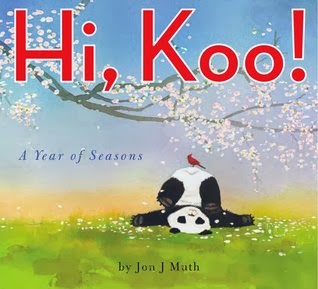
Hi, Koo! A Year of Seasons
by Jon J Muth
Call # J811.54 Muth


When Muth created the panda Koo, he was a genius. Not only is the little fluff ball adorable, but his name lends itself as a perfect play on words. (Though, now that I really think about it, if someone were to say "Hi, Koo!" they would probably be in China were pandas are found, not in Japan were haikus originated... details, details!) Koo goes on a poetic journey through the four seasons, exploring the soft watercolors of autumn, winter, spring, and summer with his friends. As an added bonous, each page/haiku has one capitalized letter, following the alphabet pattern.

This book actually surprised me. As a Professional Writing Major, I was forced to take a poetry class, and while I'm not a huge fan of most poetry, I did enjoy learning the 5-7-5 of haikus. Muth provides a nice (and much needed) note at the beginning of the book, explaining that while the 5-7-5 on (pronounced OWN) works in the Japanese language, it does not always translate to an English 5-7-5 syllable count. In fact, the importance of the haiku is not so much the form, but it's ability to portray an entire scene (and all the emotions associated with that scene) in three short lines. 

Even though this book "broke" my beloved 5-7-5 rule, it definitely expresses each scene beautifully. I would recommend this book to any patron in the children's department. Most students learn about poetry at some point in their education, and this book is a clear way to show true haikus. For younger kids who are only interested in the panda and his story, the rythym of the haikus make this a fun story to read aloud.

Other books with Koo in them are Zen Shorts (a Caldecott Honor Book), Zen Ties, and Zen Ghosts (all three of which I look forward to reading!).

Other read-alikes according to Novelist are: Firefly July by Melissa Sweet, Guyko by Bob Raczka, and Today and Today, a collection of haikus by the Japanese master, Issa Kobayashi.